Best time to visit Lagos, Algarve: month by month
8 min read
“When is Lagos at its best?” has three different answers depending on what you are here for. The best month for swimming is not the warmest month on land. The best month for boat trips is not the cheapest. And the months with the fewest people are the ones in which the boat programme is at its thinnest.
Here are the facts behind that — and, at the end, a recommendation that actually commits.
The sea lags the air
This is the single most important sentence about the Algarve, and it catches most visitors out. The Atlantic warms slowly and cools slowly. The consequence: in May the air feels like summer while the water is still cold. In October it is the other way round — the air turns autumnal while the sea is still close to its summer level.
The pattern over the year, off Lagos:
| Month | Water | Character |
|---|---|---|
| January – March | coldest of the year | cool, clear, very quiet |
| April – May | still cold | warm air, sea not yet |
| June | warming up | swimming season begins |
| July – August | among the warmest of the year | high season |
| September | still at its summer level | the best of both |
| October | surprisingly warm | autumn air, summer sea |
| November – December | cooling down | drops away fast |
Even at the height of summer the Atlantic here stays well below Mediterranean temperatures, and from one year to the next it can differ by several degrees. Anyone expecting the Mediterranean will be startled by the first jump in.
Rain, sun, wind
According to the climate normals of the Portuguese weather service IPMA for the nearest stations, Sagres and Faro (1991–2020), the western Algarve gets about 450 millimetres of rain a year — which is little. It is very unevenly distributed, though: July and August are effectively dry, while November, December and January bring seven to eight days with at least one millimetre of rain at Sagres. The wetter stretch lasts from October to April.
Wind is the variable that appears in no climate table and still decides your day. In summer a northerly to north-westerly wind — the nortada — often picks up, strongest in the afternoon. It makes the heat bearable and the water restless, in that order.
When the sun sets
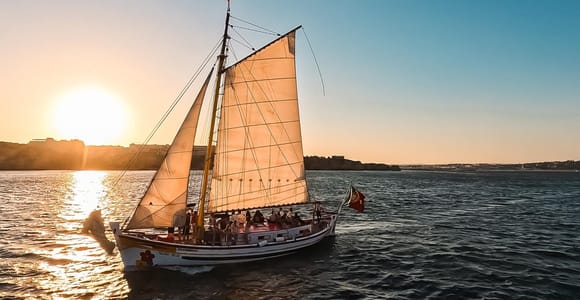
For sunset cruises, and for how long your evening will be, these are the practical figures (local time, rounded):
- January around 17:40 · March around 18:40
- April around 20:10 · June around 21:00
- August around 20:30 · September around 19:45
- October around 19:00 · November around 17:25 · December around 17:20
Watch the changeover: summer time ends on the last Sunday of October and sunset jumps an hour earlier overnight. If you are booking a sunset cruise in late October — from €25 — check the departure time twice.
The boat season
The full programme runs roughly from April to October. In that window the grotto boats go out several times a day, catamarans and sailing trips keep fixed departures, and the choice is wide enough that comparing pays off.
From November to March the programme thins out. Some operators pause entirely, others sail only when the sea allows. Atlantic depressions roll through regularly in these months, and when they do the grotto boats stay tied up for days. What that means for a booking is covered in rough seas at Ponta da Piedade.
Crowds
The peak is unambiguously July and August. The quietest months are January, February, March, November and December; April and May still count as lightly visited.
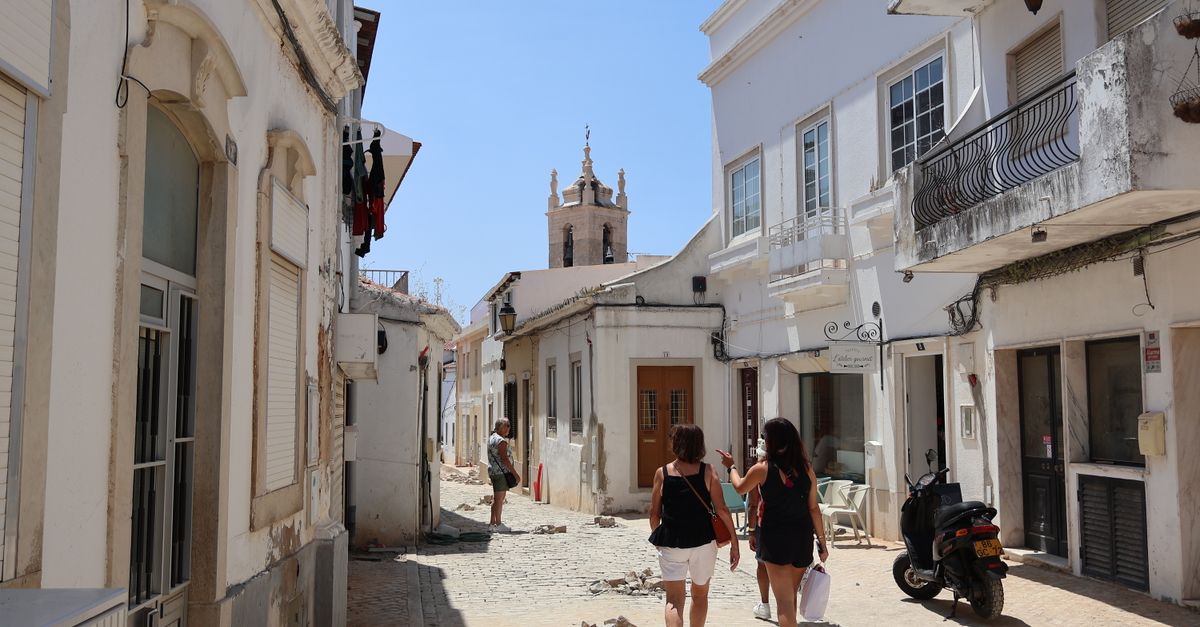
One advantage Lagos has over smaller Algarve resorts: it has a substantial resident population. Many restaurants, cafés and shops stay open through the winter. Come in January and you find a functioning town rather than a shuttered holiday strip.
The recommendation, month by month
May and June — the best compromise. Long days, warm air, little rain — in the IPMA normals for Sagres, May brings around 22 millimetres and June almost none — and manageable crowds. The catch: the water is still cold. A swim stop off the catamaran takes willpower.
September — the actual winner. The water is still at its summer level, the evenings are still long, the full boat programme runs, and there are noticeably fewer people than in August. If you can choose freely, choose September.
October — the underrated one. The sea is still close to its summer level, the cliff paths are pleasant to walk. Against that: the weather risk rises — October brings about three times as much rain as September at Sagres — and from the clock-change weekend onwards it gets dark early.
July and August — if it has to be. Everything runs, everything is open, everything is full. Book early, book in the morning, and plan shade into the hot hours. Ponta da Piedade boat tours start at €17.40, and the early departures tend to be the calmest.
April — the gamble. It can be brilliant and it can be wet. Prices and crowds argue for it; the odds of a cancelled boat trip argue against.
November to March — for walkers, not for boat passengers. The coastal paths are at their finest then: clear air, green slopes, nobody about. On the water it becomes a matter of luck. If you still want something to do, the land side delivers — things to do around Lagos start at €6.
And if the dates are already fixed?
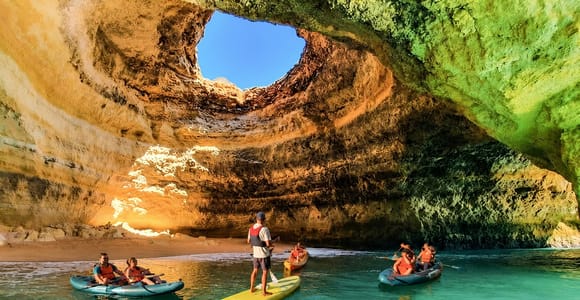
Then the month is not your most important decision — the time of day is. Mornings tend to bring calmer water, above all in summer, because the Nortada picks up later; the light inside the grottoes is good. Which hull gets into the caves at which water level is settled in which boat gets into the grottoes, and what the free clifftop route shows you is in Ponta da Piedade on foot.