Catamaran from Lagos: the calmest boat in the fleet – and what it can’t do
6 min read
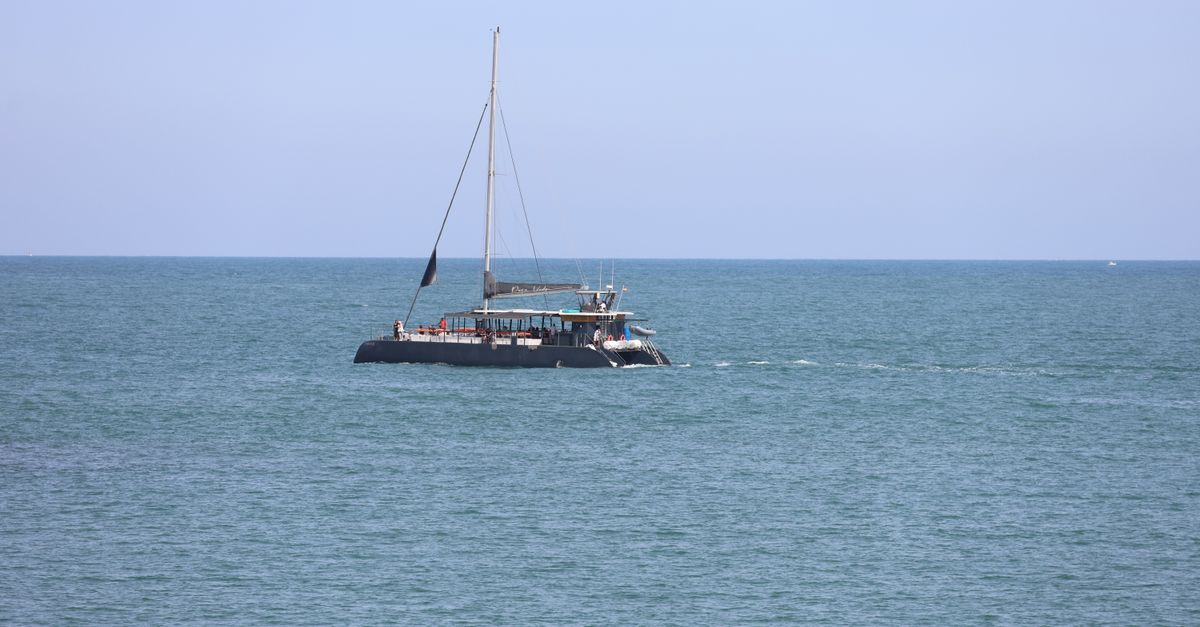
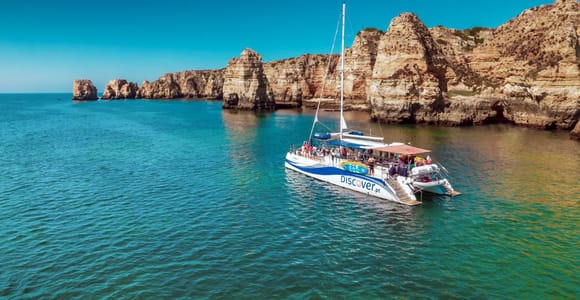
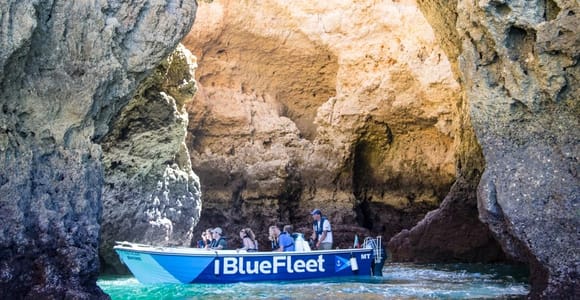
Two completely different types of boat sit side by side in the Marina de Lagos. One is a narrow, open boat that threads through the rock arches of the Ponta da Piedade. The other is a catamaran: wide, flat, with a shade deck and a net strung between the hulls. It’s the more pleasant boat in almost every respect – and it does not go into the grottoes.
Anyone who knows this books it correctly. Anyone who doesn’t ends up standing on the pontoon after two and a half lovely hours, annoyed that they only saw the caves from the outside.
Past means past
One of the most-reviewed catamaran trips from Lagos is the Ponta da Piedade Catamaran Cruise with Swim Stop: from €20, 2.5 hours, 4.7 stars from 2,004 reviews. Its booking page puts it in the first highlight: “Sail past the iconic cliffs, beaches and sea caves of Ponta da Piedade”.
Take the word “past” literally. It’s there because it’s true.
The route runs out of the marina through the Bensafrim estuary, then west: along Praia Dona Ana and Praia do Camilo, around the rock pinnacles of the Ponta da Piedade, past Canavial and Porto de Mós, on to the black cliff face of Praia da Luz, around six kilometres west of Lagos. It’s the most beautiful stretch of coastline Lagos has to offer – but it’s sailed at some distance. A pair of hulls several metres wide fits through no passage, whatever the water level. This trip does offer one way in: an optional cave visit on a smaller support boat, for an extra fee. Which type of boat gets how far in is covered in detail in Which boat really gets into the grottoes.
Two hulls, one flat boat
The structural advantage isn’t marketing: a catamaran stands on two widely spaced hulls and so barely leans to one side. Where a narrow single-hull boat bounces and rolls in the swell off the Ponta da Piedade, the catamaran tends to rise and fall rather than tip.
That’s the real reason these boats are the most tolerable choice for families, older guests and anyone prone to seasickness. Important before Lagos: on summer afternoons a north to north-west wind, the nortada, often picks up along the Algarve coast, and the sea gets more open towards the west, since the coast here already curves towards the Cabo de São Vicente. The morning crossing is usually the calmer one. If anyone in the family is prone to seasickness, check with a pharmacist or paediatrician before the trip.
What’s usually on board
On the catamarans from Lagos, this usually includes: a shade deck or sun awning, seats with backrests, room to stand up and move around, usually a toilet on board, plus the taut net strung between the hulls that you can lie on at the bow. A 75-minute grotto boat usually has none of this.
“Usually” isn’t a throwaway word here: the category lists 11 offers from different operators with different boats. Whether a toilet, shade and child-sized life jackets are actually there is stated on the respective booking page – check there, don’t assume it. The same applies to accessibility: a wide, flat deck looks accessible, but access is actually decided by the marina’s floating pontoon and the boarding point. If an operator states it, get it confirmed beforehand.
There’s no single minimum age; operators set different limits – what applies is stated on the respective booking page. One example: the sunset catamaran with music and bar aboard is not suitable for children under 16.
The swim stop is the real point
Two and a half hours with a swim stop make for a different kind of morning than 75 minutes of looking at rock. The catamaran stops in a sheltered bay along the coast, the engine cuts out, and then you drift for a while – if sea and weather allow, because the booking page makes the swim stop subject to conditions. That’s the point you’re booking for – not the caves.
One warning: the water off Lagos is Atlantic, not Mediterranean. Even in high summer, the first jump in is noticeably colder than the picture of turquoise water suggests. Anyone who feels the cold quickly should pack an extra towel.
Price: what an hour on the water costs
The comparison looks bad, and isn’t. The classic Ponta da Piedade boat tour starts from €17.40, the catamaran from €20.
Break it down by the hour and the picture flips: the catamaran gives you two and a half hours on the water, the grotto boat 75 minutes, so per hour the catamaran usually comes out cheaper. You’re just buying something different – time on the water rather than closeness to the rock.
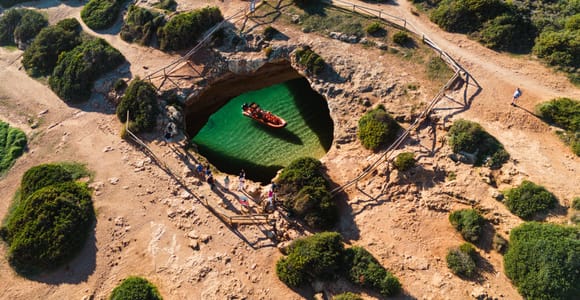
The second major catamaran option is the Dolphins & Benagil Caves Catamaran with a marine biologist as guide: from €28, 2.5 hours, 4.3 stars from 2,585 reviews. Its booking page lists a visit to the Benagil cave alongside dolphin watching, and says sightings are not guaranteed and the duration may vary with them. One question stands out: Benagil lies more than 20 kilometres east of Lagos – Portimão is the far closer harbour. A catamaran is not a fast boat, so ask the operator how much time the trip spends at the cave; the reasoning behind it is in From Lagos to Benagil. Anyone after wildlife is better served by the dolphin tours from €27.
When the catamaran is the wrong choice
Don’t book it if you want to see the grottoes from the inside. Don’t book it if you only have an hour. Don’t book it if you want to take photos and need to be close to the rock for that – from a distance, the Ponta da Piedade looks like every postcard; from three metres away, like nowhere else. And above all, not if this is your only boat trip in Lagos. Then that slot belongs to the small boat.
Which boat for whom
- Grotto boat (from €17.40, 75 minutes): first visit, photos, passing through, little time.
- Catamaran (from €20, 2.5 hours): families with young children, sensitive stomachs, need for shade, swim stop, second visit to Lagos.
- Kayak (from €20): maximum closeness, if getting wet isn’t a problem.
- Sailing trip (from €28) or sunset cruise (from €25): when the mood matters more than the destination.
The most honest order for four days in Lagos: the small boat into the grottoes first, then the catamaran for swimming. The other way round leaves a gap in the holiday that can no longer be filled.